
Table of Contents
- Why Small Alcoves Are Ideal for Wine Storage
- Assessing Your Alcove: Structural and Load-Bearing Considerations
- Vertical Space Use and Bottle Capacity Planning
- Best Practices for Wine Bottle Orientation in Compact Spaces
- Climate Control and Micro-Climate Management for Alcoves
- Minimalist Wine Display Ideas for Small Kitchens and Dining Areas
- Lighting Design to Enhance Your Alcove Wine Feature
- Choosing Between Built-In Cabinetry and Open Racking Systems
- Frequently Asked Questions
Last Updated: October 1, 2026
Why Small Alcoves Are Ideal for Wine Storage
Wine storage small alcoves transform underutilized spaces into functional wine displays that feel intentional rather than cramped. Unlike sprawling wine rooms that demand dedicated square footage, alcoves work within your existing architecture, under stairs, beside fireplaces, in kitchen nooks, or along dining room walls. The constraint of a small space forces thoughtful curation: you're displaying bottles you actually want to see, not filling empty wall real estate.
An alcove's defined boundaries simplify climate control and lighting design, making it ideal for wine enthusiasts managing 100 to 500 bottles.
VintageView's modular steel racking systems adapt to irregular dimensions and angled spaces, integrating seamlessly into your home's design.
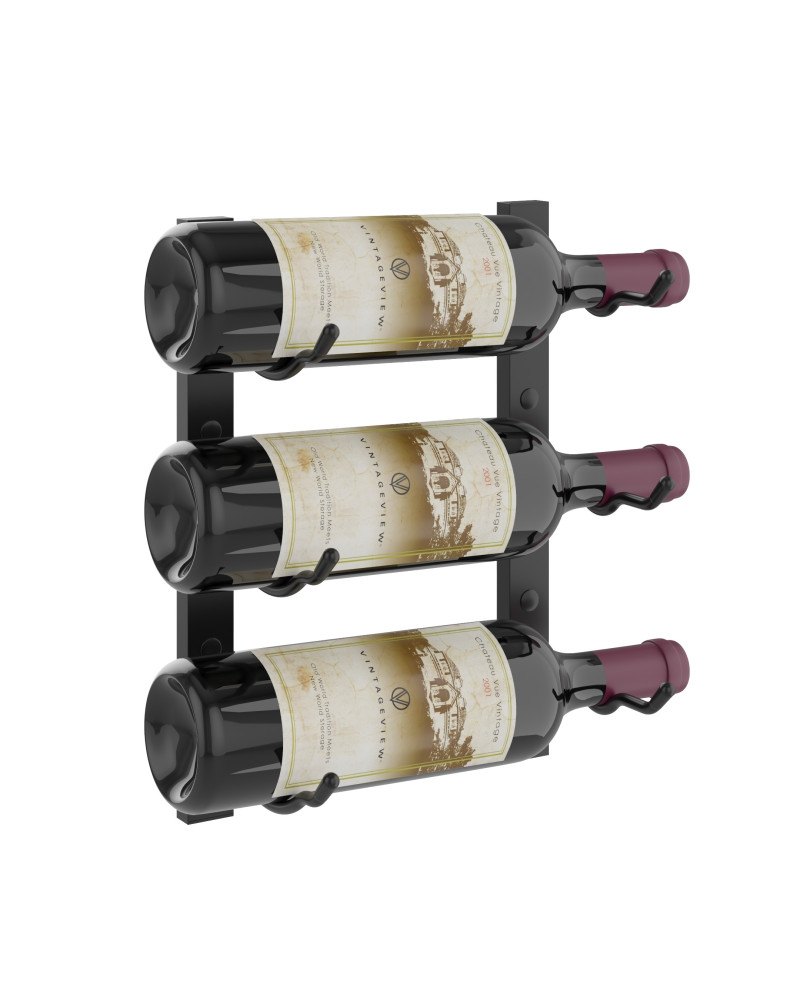 Winerack Wall Serie W11 - Depth 1 bottle
Assessing Your Alcove: Structural and Load-Bearing Considerations
Before selecting any racking system, you need honest answers about what your alcove can actually support. This is where most DIY installations fail. A beautiful wine display becomes a liability when it's mounted to drywall that can't handle the load.
Measuring Depth, Width, and Height
Use a steel tape measure to record width at three points (top, middle, bottom), depth from back wall to front edge, and height from floor to ceiling, noting any slopes or architectural details.
Sketch the alcove to scale, marking electrical outlets, radiators, and structural elements. Measure deviations in irregular shapes or sloped ceilings at multiple points.
Width determines racking type: 24 inches fits single-depth, 36 inches allows double-depth, and 48+ inches offers flexibility. VintageView's W11 and W12 systems maximize capacity without protruding into your room.
Evaluating Wall Strength and Weight Capacity
A fully loaded wine rack is heavy: a 50-bottle installation carries 75 to 100 pounds of wine plus 15 to 30 pounds of racking.
Identify wall material: masonry and concrete support substantial loads; drywall requires anchoring directly into studs or it will fail under load.
Use a stud finder to locate vertical supports (typically spaced 16 inches apart). One stud limits options; two studs provide solid anchoring. No studs visible means masonry or heavy-duty hollow-wall anchors are needed.
Press firmly on the drywall; if it flexes noticeably, it's unsuitable for racking. When in doubt, hire a structural assessment.
VintageView's modular designs distribute load across multiple connection points, reducing stress on any single anchor.
 Winerack Wall Serie W12 - Depth 2 bottles
Vertical Space Use and Bottle Capacity Planning
Once you've confirmed your alcove can handle the load, think vertically. Most people underestimate how much wine they can fit in a small space by stacking racking systems strategically.
VintageView's modular approach lets you start small and expand: stack W11 units vertically for three bottles displayed label-forward, then add columns as your collection grows.
Best Practices for Wine Bottle Orientation in Compact Spaces
Horizontal or vertical? Label-forward or label-hidden? In a compact alcove, these choices affect both function and aesthetics.
Horizontal storage keeps corks moist for long-term aging but requires more depth and hides labels.
Label-forward display is space-efficient and lets you see what you have, but bottles standing upright can develop cork issues if humidity drops.
A hybrid approach, label-forward for everyday bottles, horizontal racking for aging, balances aesthetics, access, and preservation.
In a truly compact alcove, under 18 inches deep, label-forward display is your only practical option. VintageView's single-depth systems (W11, VP1) are designed for this constraint. They project only 1 bottle depth from the wall, leaving your alcove open and visually uncluttered.
 Winerack Vino Pins VP1 - Depth 1 bottle
Climate Control and Micro-Climate Management for Alcoves
Wine's enemies are heat, light, and humidity swings. An alcove's confined space makes micro-climate management both easier and more critical.
Temperature Stability and Insulation Strategies
Ideal wine storage is 55°F. Alcoves in kitchens or near radiators can spike 10-15°F above ambient; exterior wall alcoves drop 5-10°F on winter nights.
Add insulation to exterior walls behind alcoves using fiberglass batts or rigid foam. For interior alcoves, insulate the back and sides to dampen temperature swings.
Winerack Wall Serie W11 - Depth 1 bottle →
Avoid direct sunlight; use a thin curtain or sheer panel to diffuse UV light without blocking the view.
Humidity Levels and Vapor Barriers
Corks need 40-70% humidity; dry air allows oxygen to seep in and spoil wine, while excess humidity promotes mold and label decay.
Minimalist Wine Display Ideas for Small Kitchens and Dining Areas
A wine alcove in a kitchen or dining area is a design statement. It should feel intentional, not utilitarian.
The minimalist approach uses negative space. Instead of filling every inch of your alcove, display 15 to 25 carefully selected bottles with breathing room around them. This creates visual impact and makes each bottle feel curated rather than stockpiled.
Symmetry works well in small spaces. A single column of bottles centered in your alcove, flanked by empty wall space, feels balanced and modern. Two columns with a vertical gap between them creates rhythm. Three columns across a wider alcove (48+ inches) works if you vary the heights, full height on the sides, mid-height in the middle.
Color coordination is subtle but powerful. If your collection spans reds, whites, and rosés, grouping by color creates visual coherence. Reds on the left, whites on the right, rosés in the middle. This works especially well with label-forward display, where the label colors become part of the design.
Lighting transforms a display into a focal point. A single warm-white LED strip running along the top of your alcove illuminates bottles without creating glare or heat. The light should be soft enough to read labels but bright enough to create shadow and depth on the bottles.
VintageView's steel racking systems in matte black or bronze finishes complement modern interiors. They recede visually, letting the bottles and light do the work. The clean lines of the racking feel architectural rather than decorative.
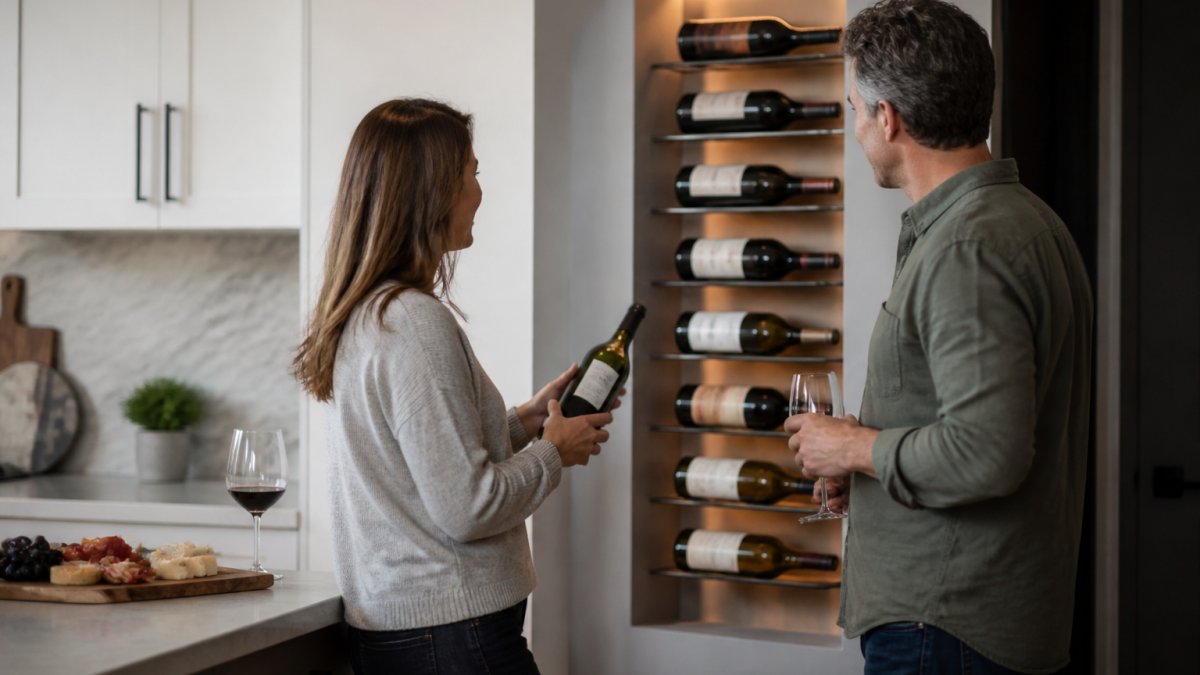 Sleek modern kitchen alcove with metal wine racks displaying bottles label-forward with soft warm LED lighting overhead, minimalist aesthetic with clean lines, neutral gray walls, and carefully spaced bottles creating visual breathing room
Lighting Design to Enhance Your Alcove Wine Feature
Lighting is often the difference between a functional storage space and a design feature. The right light makes wine bottles glow; poor lighting makes them disappear.
LED strips are the standard for alcove lighting. They run cool (no heat to affect wine temperature), last thousands of hours, and use minimal electricity. Install them along the top edge of your alcove, angled downward to illuminate the bottles without creating glare on the wall behind them.
Color temperature matters. Warm white (2700K to 3000K) creates an inviting, intimate feel, ideal for dining room or living room alcoves. Cool white (4000K to 5000K) feels more clinical and works better in kitchens where task lighting is expected. Avoid bright white (6500K+), which feels harsh and can make wine labels look washed out.
Brightness should be subtle. You want enough light to read labels and see bottle colors, not enough to cast harsh shadows or create glare. A 5-watt LED strip running the width of your alcove is usually sufficient. If you need more light, add a second strip rather than increasing the intensity of one.
Dimmers are worth the investment. They let you adjust lighting based on time of day and mood. Bright enough to see labels during the day, dimmed to ambient lighting in the evening. This flexibility makes the alcove feel intentional rather than permanently "on."
Avoid recessed ceiling lights directly above the alcove. They create unflattering shadows on bottles and can generate heat.
Choosing Between Built-In Cabinetry and Open Racking Systems
This choice defines your alcove's aesthetic and functionality. Built-in cabinetry offers concealment and climate control. Open racking offers transparency and flexibility.
Frequently Asked Questions
What's the difference between storing wine horizontally and vertically in a small alcove?
Horizontal storage keeps the cork moist. Vertical storage maximizes alcove height and is ideal for display-focused collections. For small alcoves, vertical orientation lets you fit more bottles while maintaining aesthetic appeal. Label-forward vertical displays transform your alcove into a design feature rather than just storage.
How do I know if my alcove wall can support the weight of wine storage?
Check your wall construction first: drywall alone cannot safely hold wine racks. You need solid backing, either studs behind drywall or masonry. Proper anchoring into studs or using heavy-duty wall anchors rated for your alcove's total load is non-negotiable.
Can modular racking systems work in oddly-shaped alcoves like under-stair spaces?
Yes, modular racking systems are designed for flexibility. Triangular, angled, or narrow alcoves can be accommodated by combining single-bottle and double-bottle depth units strategically. Measure your alcove's usable width at multiple heights, as under-stair spaces taper. Modular systems allow you to stagger units vertically and horizontally, adapting to irregular shapes. Start with a detailed layout before purchasing to ensure your configuration fits.
What's the ideal temperature and humidity for a small alcove wine display?
Aim for minimal temperature and humidity fluctuation. Small alcoves are harder to regulate than full cellars, so insulation and vapor barriers are critical. Passive approaches include sealing gaps, adding insulation behind racking, and avoiding direct sunlight.
What's the best way to light a small alcove wine display without damaging the bottles?
Use low-heat LED lighting only, avoid halogen or incandescent bulbs, which emit UV radiation and heat that degrade wine. Install LED strips above or along the alcove perimeter, angled to illuminate labels without creating hot spots. Dimmable LEDs let you control brightness for ambiance while protecting your collection.
How do I maximize bottle capacity in a narrow or shallow alcove?
Use single-bottle depth racking to minimize protrusion into your room, then stack units vertically to floor-to-ceiling height. Label-forward orientation displays more bottles in less floor space than cork-forward storage. Combine wall-mounted units with corner racks if your alcove has corners. Staggered or tiered layouts create visual interest while increasing density. Calculate your alcove's total cubic space first, then choose racking depth and unit count accordingly.
What materials and finishes will look premium and hold up over time?
High-quality steel racking with matte or bronze finishes resists corrosion and maintains a sophisticated appearance. Matte black and brushed bronze complement modern interiors. Inspect samples in person before committing to a full installation.