
Table of Contents
- Why a Modern Wine Display Transforms a Home Cellar
- Best Wall Mounted Wine Racks for Heavy Bottles
- Modular Wine Display Installation Tips
- Materials and Finishes That Suit Modern Interiors
- Design Styles: Contemporary, Industrial, and Minimalist
- Capacity, Bottle Count, and Space-Saving Solutions
- Commercial vs Residential Wine Display Systems
- Maintenance, Cleaning, and Long-Term Durability
- Frequently Asked Questions
Last Updated: September 10, 2026
Why a Modern Wine Display Transforms a Home Cellar
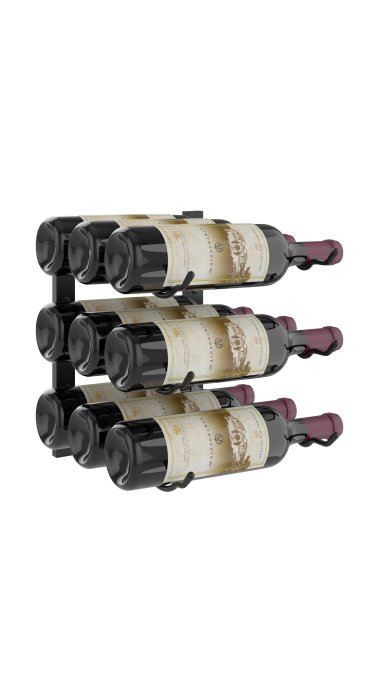
A modern wine display is a wall-mounted or modular system that holds bottles horizontally in full view, turning a collection into an architectural feature rather than hidden utility. Winerack Solutions offers premium, modular wine storage systems that utilize high-quality materials to blend functionality with modern design.
 W S13 K
Best Wall Mounted Wine Racks for Heavy Bottles
The best wall mounted wine racks for heavy bottles are rated for the combined weight of a full load and fixed into wall studs rather than drywall alone. A bottle weighs roughly 1.2 to 1.5 kilograms, so a 60-bottle rack carries 70 to 90 kilograms before the frame itself (peer-reviewed research).
Load-Bearing Capacity and Structural Integrity
Structural integrity comes down to three things: steel gauge, fixing-point spacing, and what the fixings are anchored into. Thin-gauge racks flex under load, and flex over time fatigues the mounting points, so choose a frame that spreads weight across multiple studs rather than two brackets.
The load path is the part most buyers miss. A wall-mounted rack does not just push down, it pulls outward at the top, because bottles sit forward of the fixing plane. A rack rated for 80 kilograms of downward load can still fail if the top fixings are undersized. A well-designed frame ties top and bottom rails into the same studs and keeps bottle rows close to the wall.
A practical way to size a rack before ordering:
- Count the bottles you expect to own in two years, not today.
- Multiply by 1.5 kilograms to get the wine load.
- Add the frame weight (typically 15 to 30 percent of the wine load for steel systems).
- Compare that total against the rack's stated capacity, and treat the stated figure as a ceiling, not a target.
If you are unsure whether your wall can take the load, have a builder confirm the framing before you order. A stud finder tells you where the studs are, not whether they are load-bearing.
Wall Type Changes Everything
Stud-framed drywall is the easiest wall to work with, but the fixing strategy changes with the substrate:
- Timber studs: Lag bolts or heavy structural screws driven into the stud centres. Space fixings no more than 40 to 60 centimetres apart vertically so the load is shared.
- Metal studs: Standard drywall screws will shear. Use self-drilling screws sized for the stud gauge, and add a plywood backer plate spanning at least two studs if the rack is wide.
- Brick or block: Masonry anchors sized for the rack load, set into the brick body rather than the mortar joint. Mortar is the weakest part of the wall and will crumble under a sustained pull (peer-reviewed research).
- Concrete: Wedge anchors or chemical anchors, drilled to the depth specified by the anchor manufacturer. Concrete is strong but brittle, an undersized hole lets the anchor spin and never reaches rated capacity.
- Drywall only: Not suitable for a loaded wine rack. Heavy-duty toggle anchors can hold a light shelf, but a fully loaded rack belongs in the structure behind the board.
Seismic and Vibration Safety
Most guides skip this, and it matters most in earthquake-prone regions and high-traffic rooms. A rack that is fine under static load can still throw bottles when the wall shakes, because bottles are restrained only by gravity and the rack's lip.
Three measures reduce that risk without changing the look of the display:
- Continuous restraint rails across the front of each row, so bottles cannot slide forward even if the frame flexes.
- Top and bottom anchoring into the same studs, so the frame cannot rock as a unit.
- Silicone or rubber pads at the bottle contact points to absorb vibration and stop bottles from walking along the rail over time.
Vibration matters for wine as well as safety: a frame that shifts when a door slams works its fixings loose, and constant micro-movement keeps wine in motion when it should be still (peer-reviewed research). In a hallway, kitchen, or any room with a hard-closing door, plan for restraint from the start.
Label-Forward vs Cork-Forward Orientation
Label-forward display shows the bottle's label to the room, suiting a home bar or dining space where the collection is part of the decor. Cork-forward storage faces the neck outward, which many collectors prefer because it keeps the label out of direct light. Both hold bottles horizontally, keeping the cork in contact with the wine.
|
Orientation |
What You See |
Best For |
|---|---|---|
|
Label-forward |
Full label and branding |
Home bar, entertaining spaces |
|
Cork-forward |
Bottle necks only |
Light-sensitive labels, cellars |
|
Mixed configuration |
Alternating rows |
Larger collections, visual depth |
One structural note: cork-forward rows put the bottle's centre of mass closer to the wall, reducing pull-out force on the top fixings, on a marginal wall, that can decide whether the rack is safe to hang at all.
Modular Wine Display Installation Tips
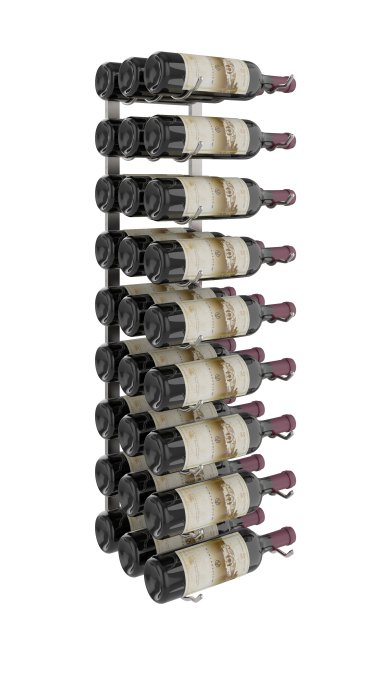
Modular wine display installation tips start with one rule: fix into studs, not drywall. A modular system is assembled from repeating sections, so you can fit an awkward wall and extend it later without replacing what you own. The mistakes that cause failures happen before the drill comes out.
 W S33 P
Plan the Layout Around the Studs, Not the Other Way Around
Stud mounting carries the load; drywall anchors do not. Plan your layout around stud positions before you drill:
- Find and mark every stud across the full width the rack will span, using a stud finder and confirming with a thin nail or magnet where the readings are ambiguous.
- Note the spacing, 40 centimetres is common in older timber framing, 60 centimetres in modern construction, and metal studs often sit at 40 centimetres on centre.
- Lay out the modular sections so each section's fixing points land on a stud. If a section falls between studs, shift the section boundary rather than adding an anchor in the gap.
- Mark the top rail first, then drop a plumb line to the bottom rail so the frame is vertical, not just level.
- Dry-fit the first section before driving any fixings home.
A common mistake is drilling the first hole before checking where the studs fall. If studs are spaced awkwardly, a wider top rail spanning three studs is stronger than a narrow rail hitting two.
Troubleshooting by Wall Type
The fixings that work on one wall can fail on another, and the failure mode is usually the same: the anchor pulls out under sustained load rather than snapping cleanly.
- Drywall over timber studs: The most forgiving wall. Drive structural screws into the stud centres, and add a plywood backer plate if the rack is wider than the stud spacing.
- Drywall over metal studs: Standard screws will strip the thin steel. Use self-drilling screws matched to the stud gauge, and back the rack with a plate that spans at least two studs so the load is not concentrated on one.
- Brick: Anchor into the brick body, not the mortar joint. Mortar is the weakest part of the wall and will crumble under a sustained pull. Masonry anchors sized for the rack load are the minimum.
- Concrete: Wedge or chemical anchors, drilled to the depth the anchor manufacturer specifies. An undersized hole lets the anchor spin and never reaches rated capacity.
- Plaster and lath: Looks like drywall, behaves nothing like it. Plaster is brittle and does not grip anchors, so the fixing must reach the stud behind it regardless of the surface.
- Tiled walls: Drill through the tile with a carbide bit at low speed, and seal the hole before inserting the fixing so moisture cannot track behind the tile.
If the wall is hollow and no studs are reachable, it is not suitable for a loaded rack without structural reinforcement. A builder can add blocking between studs, a small job compared with repairing a collapsed display. digital cellar management.
Clearance, Ventilation, and Access
Leave wall clearance behind the rack so air moves and the wall can breathe, in a humid cellar, a rack pressed flat traps moisture against the coating and plaster, where corrosion and mould start. Plan for access too: you need room in front to pull a bottle out without tilting it into the row above, and room at the sides to reach the fixings. A rack that looks perfect in a catalogue photo can be unusable if mounted too close to a corner or a door swing.
When to Stop and Call a Builder
Most modular installations are a weekend job with a drill, a level, and a second pair of hands. The exceptions:
- The wall is hollow and no studs are reachable across the span.
- The rack is going above a doorway, a window, or any opening that interrupts the framing.
- The wall is shared with a neighbouring property and you are unsure what is behind it.
- The floor or wall shows existing movement, cracks, or water damage.
In any of those cases, have the framing confirmed before you order. The rack is the easy part; the wall decides whether the display stays up.
Materials and Finishes That Suit Modern Interiors
Steel is the material most modern displays are built from, and the finish separates a premium rack from one that looks cheap in person. Powder coating bonds to the metal as a single skin rather than sitting on top as paint, so it resists chipping and holds colour. A matte finish hides fingerprints and dust better than gloss, which matters in a kitchen or home bar.
Winerack Solutions offers multiple finish options including matte black, brushed nickel, chrome, golden bronze, and gun metal. Corrosion-resistant coatings matter most in humid cellars and coastal homes, where bare steel will pit within a season or two.
Design Styles: Contemporary, Industrial, and Minimalist
Design style decides the visual weight of the rack, not just its colour. A contemporary aesthetic leans on clean horizontal lines and a single finish across the whole wall. Industrial styling works with exposed brick, concrete, and darker metal, often floor-to-ceiling. Minimalist displays use fewer visible fixings, thinner profiles, and generous space between rows so the bottles, not the frame, draw the eye. Mixing styles in one room usually reads as a mistake.
Capacity, Bottle Count, and Space-Saving Solutions
Bottle capacity should be planned for the collection you expect in two years, not the one you own today. A common regret is a rack bought for 24 bottles that is full within a year. Modular systems solve this because you add sections rather than replace the whole unit. Space-saving designs matter most in small homes: under-stair areas, kitchen alcoves, and narrow wall returns can all hold a display if the rack is built to the shape of the space. A floor-to-ceiling column uses vertical space without taking floor area.
Commercial vs Residential Wine Display Systems
Commercial wine display systems face conditions a home cellar never sees: constant handling, higher traffic, and a need for security. A restaurant or boutique retailer needs commercial-grade construction and often locking or anti-theft provision, because bottles on open display are within reach. Residential systems can prioritise aesthetics and finish choice. Durability expectations differ too: a home rack might be loaded a few times a week, while a hospitality rack is touched dozens of times a day. Powder-coated steel handles that wear better than painted finishes, which scuff where bottles slide in and out.
Maintenance, Cleaning, and Long-Term Durability
Cleaning a metal wine rack takes minutes on a schedule and hours if you don't. Dust settles on the horizontal rails and bottle contact points, and in a humid cellar that dust traps moisture against the coating.
A simple routine keeps a display looking new:
- Dust rails and uprights with a dry microfibre cloth every two to four weeks
- Wipe contact points with a damp cloth and mild soap, then dry immediately
- Check mounting fixings for movement twice a year
- Inspect for scuffs at bottle contact points and touch up where needed
- Keep humidity in the cellar within a stable range to protect both wine and coating
The hard part of a modern wine display is not choosing a finish. It is getting the load path right, planning capacity for the collection you will have in two years, and building around the space you actually own. Winerack Solutions offers modular systems that scale from small niches to complete wine cellars, with multiple finish options including matte black, brushed nickel, chrome, golden bronze, and gun metal. Expert assistance with layouts, capacity planning, and design recommendations is available. Get started with Winerack Solutions and turn the wall you already have into a display your collection deserves.
Frequently Asked Questions
Are wall mounted wine racks safe for heavy bottles?
Yes, when installed correctly. A modern wine display rated for heavy bottles uses powder-coated steel and must be fixed into wall studs or masonry with appropriate anchors, not drywall alone. Check the rack's stated load-bearing capacity, keep the heaviest bottles on lower rows, and confirm your wall type before mounting. Horizontal storage also keeps corks moist and reduces vibration, which helps preserve wine over time.
Should wine be stored label-forward or cork-forward in a modern display?
Label-forward is the standard for a modern wine display because it turns bottles into a visible collection, making it easy to find a specific vintage without pulling bottles out. Cork-forward hides labels but can look cleaner from a distance. Many collectors mix both: label-forward for showpiece bottles and cork-forward for everyday drinking stock. Your choice mainly affects aesthetics and how quickly you can identify a bottle.
How do I install a modular wine display if I am not handy?
Start by locating studs with a stud finder and marking a level line for the first rail. Fix the rail into studs using the supplied hardware; use drywall anchors only for light loads. Test the first row with bottles before adding more rows. If your wall is unusual, ask the supplier for a layout plan before you drill.
Can a modular metal wine rack work in an oddly shaped space like under a staircase?
Yes, modular designs are built for this. Because sections connect in custom configurations, you can stack shorter columns under a slope and taller ones on the flat wall. Measure the narrowest point, the height at both ends, and any obstructions, then plan the layout around them. Corrosion-resistant powder-coated steel suits alcoves and under-stair areas where airflow and humidity vary, and a wall-mounted setup keeps floor space clear.