
Table of Contents
- Why Luxury Wine Display Matters in Restaurant Design
- Commercial Grade Wine Racking Systems for High-Capacity Storage
- Restaurant Wine Wall Design: Creating Statement Features
- Best Practices for Restaurant Wine Storage and Display
- Design Aesthetics: Matte Black and Modern Finishes
- ROI and Business Impact of Premium Wine Displays
- Modular Flexibility for Evolving Collections
- Frequently Asked Questions
Last Updated: September 29, 2026
Why Luxury Wine Display Matters in Restaurant Design
A luxury wine display for restaurant design transforms a dining space into a curated experience. It signals sophistication to guests, showcases your collection as a design statement, and creates an opportunity for staff to engage customers around your wine program. The difference between a functional wine rack and a luxury wine display is the difference between storing bottles and telling a story about them.
 Matte Black Modular Wine Display Rack Waterfall
For restaurants, wine displays serve a dual purpose: they're both visual merchandising and operational infrastructure. A well-designed display increases wine sales by making your collection visible and accessible. It also reduces staff time spent hunting for bottles in back storage. At Winerack Solutions, we help hospitality professionals transform their wine collections into true eye-catchers.
The commercial-grade wine racking systems designed for restaurants differ fundamentally from residential displays. They must handle higher volume, support heavier loads, and maintain structural integrity under constant use. They also need to look exceptional because they're part of your dining room aesthetic, not hidden in a cellar.
Commercial Grade Wine Racking Systems for High-Capacity Storage
Commercial-grade wine racking systems are engineered to hold significantly more weight than residential solutions while maintaining a refined appearance. These systems use heavy-duty steel construction, precision engineering, and modular design to deliver both capacity and aesthetic appeal.
High-Density Modular Solutions
High-density storage means fitting more bottles into less space without compromising accessibility or visual appeal. Modular systems allow you to build configurations that match your exact space and collection size. You're not locked into a single design; instead, you scale up or down as your wine program evolves.
The modular approach works because each component is independently engineered to perform. Individual rack units stack vertically and connect horizontally, creating flexibility that fixed installations cannot offer. For a restaurant with an oddly-shaped corner or a space under stairs, modular systems adapt where rigid structures fail.
VintageView's modular wine walls come in several capacities. The Matte Black Modular Wine Wall - WS8 holds 360 bottles across 244 centimeters of height, creating a dramatic floor-to-ceiling statement. For restaurants with moderate collections, the WS7 configuration holds 315 bottles, while the WS6 holds 270 bottles. Each uses the same engineering principles; the difference is scale.
 Matte Black Modular Wine Wall - WS8
The key advantage of modular design is that you can start smaller and expand. Many restaurants begin with a 100-bottle display and add sections as their wine program grows. You're not replacing the entire system; you're extending it.
Structural Integrity and Weight Capacity
Structural integrity is non-negotiable in a commercial environment. A wine bottle weighs approximately 1.5 kilograms when full. A system designed to hold 300 bottles must support roughly 450 kilograms of weight plus the weight of the rack itself, all while mounted to your wall or freestanding.
Heavy-duty steel construction handles this load. The steel profile is engineered to distribute weight evenly across mounting points. Proper installation into wall studs or structural support is critical; the system is only as strong as what it's anchored to.
Weight capacity also accounts for uneven loading. In a real restaurant, not every position on the rack will be filled simultaneously. Some sections will hold full bottles while others hold empties or partial stock. The system must handle this dynamic loading without sagging or shifting.
Restaurant Wine Wall Design: Creating Statement Features
A wine wall is more than storage; it's architecture. It occupies wall space that could be used for art, mirrors, or empty wall. The decision to make it a statement feature means designing it intentionally rather than filling space.
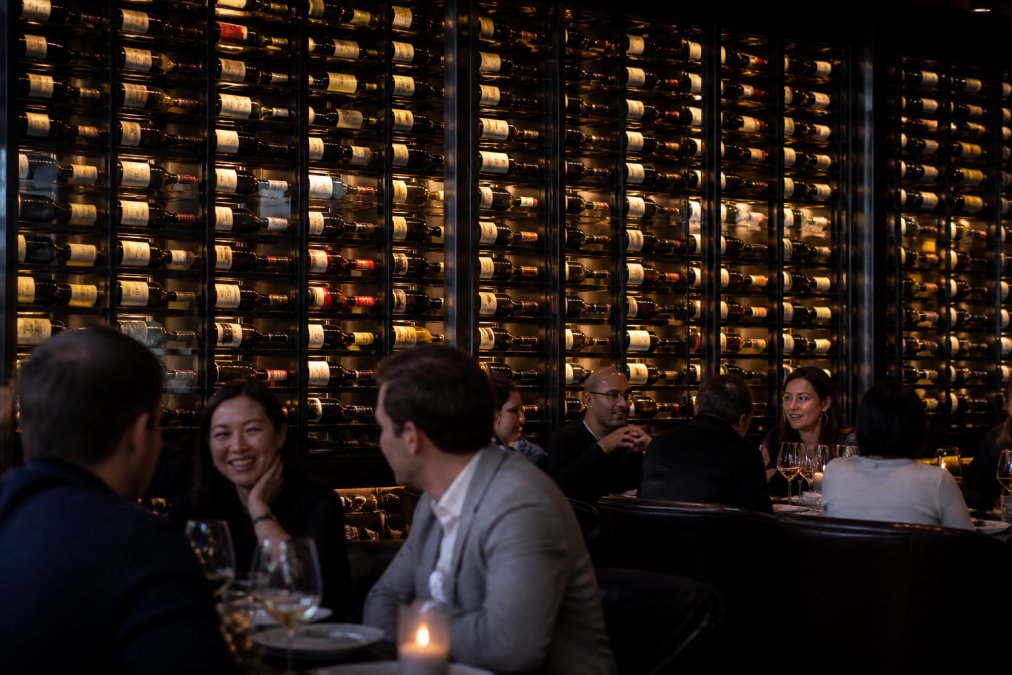 Upscale restaurant dining room with dramatic floor-to-ceiling matte black wine wall display featuring bottles in label-forward orientation, warm ambient lighting illuminating the collection, and diners in foreground enjoying the sophisticated setting
Label-Forward vs. Cork-Forward Orientation
Label-forward orientation displays the wine label toward the viewer. This is the luxury wine display standard for restaurants because labels tell the story: the producer, vintage, region, and style are all visible at a glance. Diners can browse the collection visually and make selections based on what they see.
Cork-forward orientation stores bottles horizontally with the cork facing out. This orientation is traditional for wine cellars where the goal is preservation over display. Horizontal storage keeps the cork moist, which is important for long-term aging. But in a restaurant, you're selling wine within weeks or months, not decades. The preservation advantage is minimal, and the visual storytelling is lost.
For a luxury wine display, label-forward is the right choice. It transforms your collection into a curated selection rather than inventory. Guests see your choices and feel the intentionality behind your wine program.
Scale and Proportion for Different Dining Spaces
Scale matters. A 360-bottle wall in a 50-seat restaurant feels overwhelming. A 16-bottle display in a 200-seat fine dining establishment feels insufficient. The right scale depends on your dining room size, ceiling height, and the visual weight you want the display to carry.
Matte Black Modular Wine Wall - WS8 →
For intimate dining spaces (under 60 seats), displays of 60-100 bottles create a focal point without dominating the room. The Matte Black Modular Wine Display Rack Waterfall holds 81 bottles and works well in this context, creating a statement feature that doesn't overwhelm the space.
For larger restaurants (100+ seats), floor-to-ceiling installations make sense. A 200-300 bottle display becomes part of the room's architecture rather than a single focal point. It signals that wine is central to your concept.
Proportion also considers the wall itself. A 244-centimeter-high display needs ceiling height to match. In restaurants with standard 240-centimeter ceilings, a floor-to-ceiling display looks cramped. In spaces with 270+ centimeters, it becomes a dramatic architectural feature.
Best Practices for Restaurant Wine Storage and Display
Restaurant wine storage requires balancing visibility with protection. Your display bottles need to be accessible to staff, protected from damage, and stored in conditions that preserve quality.
Ambient Lighting and Visual Merchandising
Lighting transforms a wine display from functional to luxurious. Ambient lighting should highlight the bottles without creating glare or heat that damages wine. LED accent lighting is the standard because it produces minimal heat and can be color-tuned to complement your design aesthetic.
Warm white lighting (2700-3000 Kelvin) creates an inviting, sophisticated atmosphere. It makes wine labels readable and bottles visually appealing. Cool white lighting (5000+ Kelvin) feels clinical and institutional; avoid it in dining spaces.
The lighting should be positioned to illuminate the bottles without creating hot spots or harsh shadows.
Accessibility and Ergonomics for Staff
Staff need to reach bottles quickly during service. A display that looks beautiful but requires a ladder to access every bottle creates operational friction. Bottles at eye level (roughly 150-170 centimeters) should be your most frequently ordered selections. Premium or specialty bottles can be higher; everyday selections should be accessible without reaching.
Design Aesthetics: Matte Black and Modern Finishes
Matte black has become the standard finish for luxury wine displays because it provides visual contrast that makes labels pop while maintaining a sophisticated, contemporary look. The matte finish avoids the reflective quality of glossy black, which can feel cheap or plasticky in person.
ROI and Business Impact of Premium Wine Displays
A luxury wine display increases wine revenue in multiple ways. First, visibility drives sales. Wines on display sell faster than wines in back storage. Staff naturally upsell from what's visible. Guests make impulse selections based on what they see.
Modular Flexibility for Evolving Collections
Your wine program will evolve. You'll add selections, drop underperformers, and adjust your focus as your restaurant matures. A modular system grows with these changes rather than limiting you.
| Display Size | Bottle Capacity | Best For | Starting Investment |
|---|---|---|---|
| Small (16-30 bottles) | 16-30 | Intimate dining, wine bars | Modular Showcase or Under Stairs Kit |
| Medium (60-100 bottles) | 81 | Mid-size restaurants | Waterfall Display Rack |
| Large (150-200 bottles) | 144-270 | Upscale dining, wine-focused venues | WS6 or 7-Piece Kit |
| Extra Large (300+ bottles) | 315-360 | Fine dining, wine destinations | WS7 or WS8 |
Frequently Asked Questions
How do you design a luxury wine display for a restaurant?
Start by assessing your space and collection size. Choose between wall-mounted systems for compact areas or floor-to-ceiling displays for dramatic statement features. Label-forward orientation showcases bottle labels and creates visual interest, while strategic lighting, whether ambient or accent, elevates the entire display. Consider your restaurant's aesthetic: matte black finishes provide a modern, sophisticated backdrop that complements fine dining environments. Modular systems allow you to scale your display as your collection grows, ensuring your investment adapts to future needs.
What are the best materials for commercial grade wine racking systems?
Commercial-grade systems require heavy-duty steel construction to handle the weight of hundreds of bottles in busy hospitality environments. Powder-coated finishes like matte black resist corrosion, maintain their appearance under frequent handling, and provide a premium aesthetic that enhances restaurant ambiance. Modular designs allow you to combine individual racks into larger configurations without compromising structural integrity. Look for systems with proven weight capacity and durable anchor systems that securely fasten to walls or stand independently.
Can modular wine displays work in oddly-shaped restaurant spaces?
Yes. Modular systems offer complete layout flexibility, you can arrange individual racks in grids, cascades, or custom patterns to fit triangular, narrow, or sloped spaces. Single-bottle display racks allow you to create personalized configurations that work around architectural constraints like pillars, windows, or irregular wall dimensions. This adaptability makes modular solutions ideal for restaurants with non-standard floor plans or those looking to maximize underutilized areas like spaces under stairs or beside architectural features.
How do wine displays improve restaurant ambiance and sales?
A well-designed luxury wine display serves as both functional storage and visual centerpiece. It creates a curated, high-end atmosphere that signals quality to diners and encourages wine purchases by making your collection visible and accessible. Strategic lighting highlights individual bottles, creating focal points that draw the eye and spark conversation. Organized, beautiful displays also reduce staff time searching for bottles, improving service speed and accuracy, directly impacting guest satisfaction and revenue per cover.