
Table of Contents
- What Makes a Wall Mounted Wine Rack Safe for Heavy Bottles?
- Quick Comparison: Top Picks for Heavy-Duty Wall Racks
- 1. Modular Steel Racks: Best for Custom Configurations
- 2. Single-Bottle Displays: Best for Label-Forward Presentation
- 3. Multi-Tier Wood and Metal Racks: Best for Large Collections
- Wine Rack Weight Capacity Guide: How Much Can Your Wall Hold?
- How to Install Wine Racks on Drywall: A Step-by-Step Guide
- Common Installation Mistakes and Maintenance Tips
- Frequently Asked Questions
Last Updated: September 9, 2026
What Makes a Wall Mounted Wine Rack Safe for Heavy Bottles?
A wall mounted wine rack is only as good as its weakest link, and for heavy bottles that link is almost always the mounting system, not the rack itself. The most common failure point is not the steel or the welds, but the interface between the rack and your wall: a rack rated for 200 pounds is useless if it is anchored only into drywall. Safety for heavier bottles comes down to three factors: the structural integrity of the frame, the load-bearing capacity of your wall, and proper installation into wall studs.
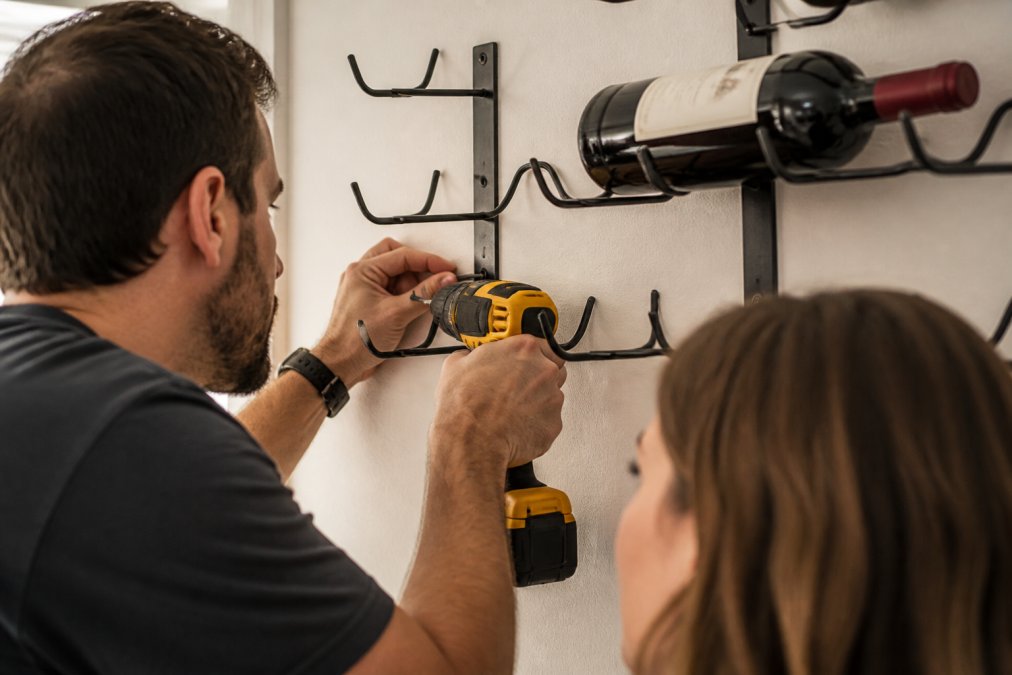 Close-up of hands securing a stainless steel wine rack bracket to a wall stud with a power drill, mounting hardware visible, a heavy bottle resting in the rack
Before you buy, check the rack's stated weight capacity per bottle and per linear foot. Standard wine bottles weigh roughly 2.5 to 3 pounds, but heavy burgundy and champagne bottles can exceed 4 pounds each. A rack holding 12 heavy bottles may need to support 50 pounds or more, which demands stud mounting, not drywall anchors alone. Winerack Solutions offers premium-quality steel construction, with powder-coated frames and hardware engineered for the full weight of a loaded collection.
The material matters as much as the anchor points. Powder-coated steel resists corrosion and maintains its structural integrity far better than lighter alloys or untreated metals, especially in environments where humidity control is inconsistent. A rack that flexes under load will eventually loosen its fasteners, so look for rigid, welded or heavy-gauge construction rather than thin, spot-welded frames.
Quick Comparison: Top Picks for Heavy-Duty Wall Racks
Wall mounted wine racks for heavy bottles generally fall into three categories, each suited to a different display philosophy and collection size. The table below summarizes the key differences to help you match a style to your space and your bottles.
| Rack Type | Best For | Mounting Requirement | Bottle Orientation |
|---|---|---|---|
| Modular Steel Racks | Custom configurations, growing collections | Stud mounting, load-bearing wall | Horizontal, cork-forward |
| Single-Bottle Displays | Label-forward presentation, accents | Single stud or heavy anchor | Horizontal, label-forward |
| Multi-Tier Wood and Metal Racks | Large collections, home bars | Multiple studs, reinforced | Horizontal, varied tiers |
The right choice depends on whether you prioritize capacity, aesthetics, or the ability to reconfigure later. For collectors who expect their wine collection management needs to evolve, modular systems offer the most flexibility.
1. Modular Steel Racks: Best for Custom Configurations
For serious collectors and interior designers, modular steel racks are the most versatile option for wall mounted wine racks. These systems use individual rails and bottle holders that lock into place, allowing you to build a layout that fits oddly-shaped spaces, such as triangular under-stair alcoves or narrow kitchen walls, without being locked into standard rectangular dimensions.
The chief advantage is scalability. You can start with a small configuration and expand as your collection grows, which directly addresses the common worry about outgrowing a rack system within a year or two. Premium modular systems from Winerack Solutions offer multiple finish options, including matte black, brushed nickel, chrome, golden bronze, and gun metal, so the rack becomes a design feature rather than a utilitarian afterthought.
Winerack Solutions offers straightforward installation with all necessary hardware included.
2. Single-Bottle Displays: Best for Label-Forward Presentation
Single-bottle wall mounted wine racks prioritize the visual over the practical, and they excel at one specific job: turning a prized vintage into a piece of art. These displays hold each bottle horizontally with the label facing outward, creating a clean, gallery-like presentation that suits boutique retail settings, wine bars, or a curated feature wall in a home.
The trade-off is capacity. A wall of single-bottle displays consumes significant vertical space for a relatively small number of bottles, so this style works best for a curated selection rather than a full collection. For restaurants and hospitality venues, however, the label-forward approach serves a commercial purpose: it merchandises the wine list visually and prompts guest interest in premium offerings.
Structural integrity is still critical here, even with a single bottle. A heavy champagne bottle held at the end of a cantilevered display arm creates significant use on the mounting point. Look for displays with a low center of gravity and a wide mounting plate that distributes the load across the wall, rather than a thin arm that concentrates stress on a single screw. durable wine glasses.
3. Multi-Tier Wood and Metal Racks: Best for Large Collections
When your collection outgrows a few modular rails, multi-tier wall mounted wine racks combine wood and metal to deliver both capacity and a contemporary aesthetic. These units typically feature powder-coated steel frames with wooden shelves or bottle cradles, offering the warmth of natural material with the structural reliability of metal.
Multi-tier racks are the workhorses of home bars and serious collectors. They maximize vertical space by stacking rows of bottles, and the best designs keep each bottle in horizontal storage, which is essential for wine preservation because it keeps the cork in contact with the wine. This cork-forward orientation maintains the seal and prevents premature oxidation.
Because these units are heavier and hold more weight, installation demands more care. You are typically mounting a unit that will support dozens of bottles, which means the total load can easily exceed 100 kilograms. This level of weight requires anchoring into multiple wall studs, and for the largest configurations, you should consider a floor-to-ceiling post or a load-bearing wall with additional reinforcement.
Wine Rack Weight Capacity Guide: How Much Can Your Wall Hold?
Understanding your wall's capacity is the first step in choosing any wall mounted wine rack, and it is non-negotiable for heavy bottles. Standard residential drywall alone cannot support significant weight; the structural support comes from the wooden or metal studs behind it. A typical wall stud can support a substantial load, but the exact figure depends on the stud material, spacing, and condition, so you should always verify what you are working with before mounting.
Use a stud finder to locate the studs behind your chosen wall. Mark the center of each stud, then plan your rack layout so that the mounting brackets land on these centers. For modular systems, this is straightforward because the rails are designed to span multiple studs. For larger multi-tier units, you may need to adjust the rack's position slightly to ensure every bracket hits a stud.
If you cannot align the rack with studs, your options are more limited. Heavy-duty toggle bolts can support a moderate load in drywall, but they are a poor substitute for stud mounting when you are dealing with dozens of heavy bottles. For walls where stud mounting is impossible, consider a floor-standing rack or a wall-mounted unit that also rests on the floor to transfer some of the weight. When in doubt, consult the structural guidelines for wall-mounted storage from the International Code Council to understand the load requirements for your specific wall type.
How to Install Wine Racks on Drywall: A Step-by-Step Guide
Installing wall mounted wine racks on drywall is a straightforward process if you follow a methodical sequence, and the most important rule is to locate your studs first. Skipping this step is the single most common DIY installation mistake, and it leads directly to the rack pulling out of the wall under load.
- Locate the studs. Use a quality electronic stud finder to map the stud positions across your entire mounting area. Mark the center of each stud with a pencil.
- Hold the rack or rail in position. Use a level to ensure it is perfectly horizontal, then mark the screw holes that align with your stud marks.
- Drill pilot holes. Using a drill bit slightly smaller than your mounting screws, drill pilot holes into the studs. This prevents the wood from splitting and makes screw insertion easier.
- Mount the rail or bracket. Secure the rack to the wall using the included mounting hardware, driving screws firmly into the studs. Do not overtighten, as this can strip the threads or crush the drywall.
- Verify stability. Before loading any bottles, apply firm pressure to the rack in all directions. It should feel rock-solid with no flex or movement.
- Load bottles gradually. Start with lighter bottles and check the mounting again after a few days to ensure nothing has loosened.
For DIY installation troubleshooting, the most common issues are a rack that is not level and screws that spin without tightening. A level issue usually means the floor or ceiling is not level, so trust your spirit level rather than the room's sightlines. Spinning screws indicate you have missed the stud and are biting only into drywall; back the screw out and relocate it to a stud position.
Common Installation Mistakes and Maintenance Tips
The gap between a rack that lasts decades and one that fails within months usually comes down to installation discipline and ongoing maintenance. Beyond missing the studs, the most frequent mistakes include using the wrong screw length, failing to use a level, and overloading the rack beyond its rated capacity.
Maintenance for powder-coated metal racks is minimal but important for preserving both appearance and function. Dust and wine residue can accumulate on the rails and bottle cradles, so wipe the rack down periodically with a soft, damp cloth. Avoid abrasive cleaners that can scratch the powder-coated finish, which protects the steel from corrosion. In environments with high humidity, such as a kitchen or a basement wine cellar, the finish is your first line of defense against rust.
Seismic safety is an often-overlooked consideration for wine storage. In earthquake-prone regions, a wall-mounted rack full of heavy bottles presents a real hazard. Beyond secure stud mounting, consider adding a safety cable or a front rail that prevents bottles from sliding forward during a tremor. The Federal Emergency Management Agency's guidance on securing tall and heavy furniture offers practical recommendations that apply equally to wall-mounted wine storage. For commercial venues, the Occupational Safety and Health Administration's guidelines on storage and racking safety emphasize regular inspection of mounting hardware, a practice that residential collectors should adopt as well.
If you are unsure about your wall's integrity or the installation demands of a large rack, professional assistance is a worthwhile investment. The cost of a mounting error with valuable bottles far exceeds the cost of a qualified installer.
Choosing the best wall mounted wine racks for heavy bottles comes down to matching the rack's structural capacity to your wall's true load-bearing limits, then installing with the discipline that heavy glass demands. Modular steel systems from Winerack Solutions offer the flexibility to grow with your collection, with premium powder-coated finishes and straightforward installation that works for both residential and commercial spaces. Shop Now!
Frequently Asked Questions
Are wall mounted wine racks safe for heavy bottles?
Yes, wall mounted wine racks are safe for heavy bottles when they are properly installed. The key is to anchor the rack directly into wall studs using heavy-duty lag bolts, rather than relying on drywall anchors alone. A quality rack made from welded steel or solid hardwood with a published weight capacity will safely hold standard 750ml bottles and larger formats like magnums. Always verify the rack's load rating and your wall's structural integrity before mounting.
What is the best wall mounted wine rack for a home cellar?
The best wall mounted wine rack for a home cellar depends on your collection size and space. Modular steel systems offer the most flexibility, allowing you to scale from a small display to a full cellar wall. For a more traditional look, wooden racks with a high weight capacity are a solid choice. Look for systems that offer horizontal bottle storage to keep corks moist and include a powder-coated finish for corrosion resistance in a cellar environment.
How do I ensure my wall-mounted wine rack is properly anchored?
To ensure your rack is properly anchored, first locate the wall studs using a stud finder. The mounting brackets must be secured to the studs with the included heavy-duty screws or bolts. If studs are not accessible, use high-quality toggle bolts or drywall anchors rated for at least double the weight of your fully loaded rack. Avoid mounting a rack for heavy bottles on drywall alone without anchors, as this is the most common cause of failure.
Can wall mounted wine racks hold champagne and large-format bottles?
Yes, many heavy-duty wall mounted wine racks can hold champagne and large-format bottles, but you must check the specifications. Champagne bottles are typically heavier and have a larger diameter than standard wine bottles. Look for racks with a stated 'oversized bottle' capacity or adjustable shelves. The weight capacity guide for the rack should also be high enough to account for the extra weight of these bottles, ensuring the rack and its mounting hardware are not overloaded.