
Table of Contents
- Quick Comparison: Magnum Wine Racks at a Glance
- How to Store Magnum Wine Bottles Safely
- Wall Mounted Wine Racks for Heavy Bottles
- Vino Pins VPM1: Single-Depth Magnum Storage
- Vino Pins VPM2: Double-Depth Magnum Capacity
- Vino Rails VRM: Linear Magnum Display System
- Key Specifications for Magnum Bottle Racks
- Material Durability: Powder-Coated Steel and Finishes
- Frequently Asked Questions
Last Updated: September 25, 2026
Quick Comparison: Magnum Wine Racks at a Glance
| System | Bottle Capacity | Depth | Best For | Starting Price |
|---|---|---|---|---|
| Vino Pins VPM1 | Single bottle | 1-layer | Minimalist displays, limited wall space | $33.88 |
| Vino Pins VPM2 | Double bottle | 2-layer | Serious collectors, maximum capacity | $64.13 |
| Vino Rails VRM | Single bottle | 1-layer | Linear displays, aesthetic focus | $56.87 |
Magnum bottles (1.5 liters) weigh 4.5-5 pounds when filled, nearly twice a standard 750ml bottle. This demands weight distribution and structural integrity that standard racks cannot provide. VintageView's systems combine powder-coated steel construction with proprietary anchor systems engineered specifically for magnum collections.
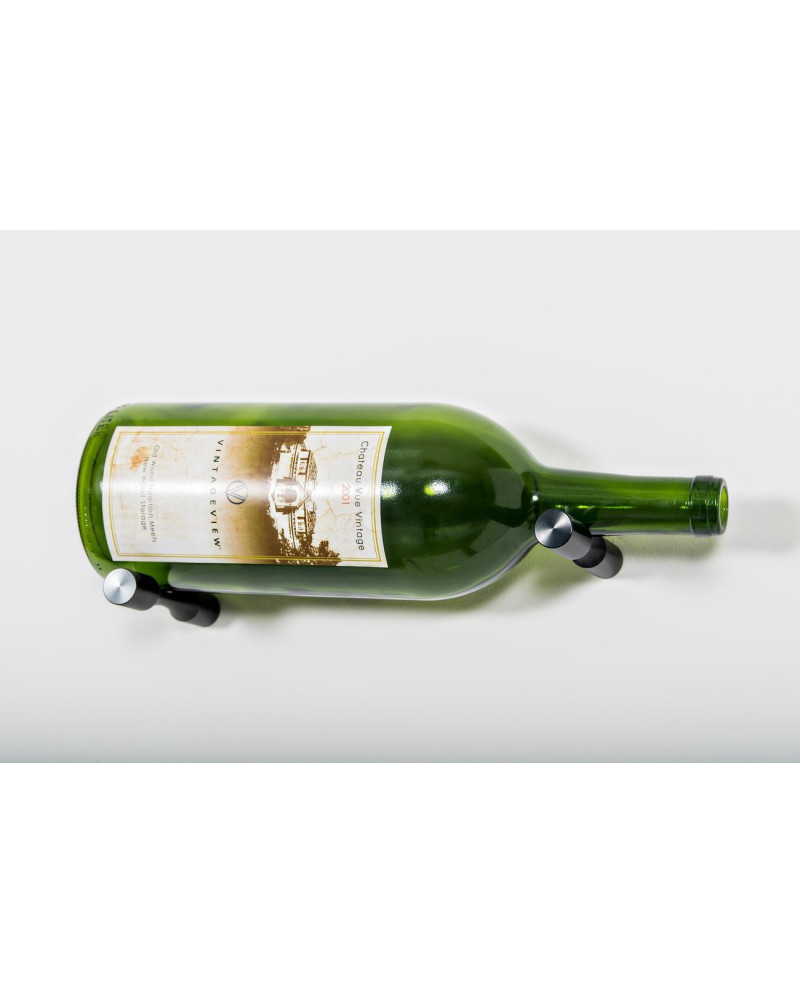 Winerack Vino Pins VPM1 - Depth 1 Magnum
The best wine racks for magnum bottle collections balance three factors: secure mounting hardware that distributes weight across studs, proper bottle orientation to preserve cork integrity, and design that complements your space. The right system transforms your collection into both functional storage and an architectural feature.
Below, we'll walk you through how to select and install the ideal magnum storage system for your space, plus detailed reviews of VintageView's purpose-built options.
How to Store Magnum Wine Bottles Safely
Magnum bottles create forces that standard wine racks cannot handle. Proper storage protects both your investment and the wine itself.
Horizontal storage keeps corks moist and minimizes sediment disturbance, but places maximum stress on mounting hardware. This is why rack depth and anchor strength matter enormously.
Neck-Forward vs. Label-Forward Orientation
Neck-forward storage positions the bottle's neck toward the wall with the label facing outward, maximizing visual display. It's preferred for restaurants, wine bars, and collectors wanting prominent display.
Label-forward storage hides labels and distributes weight more evenly across support points, reducing stress concentration. For heavy collections or uncertain wall integrity, it provides a safety margin.
Choose neck-forward for visual impact on strong walls; label-forward for safety or subtle aesthetics.
Cork Orientation and Sediment Settling
Horizontal storage keeps corks hydrated, but sediment shifts with movement. For bottles approaching their peak drinking window, sediment position becomes relevant.
Slight-angle storage keeps corks moist while allowing sediment to settle predictably, making it easier to avoid when pouring.
Most magnum racks store bottles horizontally. Cork preservation outweighs minor sediment management challenges.
Wall Mounted Wine Racks for Heavy Bottles
Wall-mounted systems maximize floor space and integrate seamlessly into interior design, becoming part of your room's architecture.
 Diagram illustrating secure installation steps for the best wine racks for magnum bottle collections on walls
The critical difference is the anchor system. Standard racks use anchors rated for 20-30 pounds; magnum racks require heavy-duty anchors rated for 50+ pounds per mounting point.
Weight Distribution and Structural Integrity
Spread the load across multiple anchor points. VintageView's modular systems use multiple anchor locations per cubby, so each bottle's weight is never concentrated at a single fastener.
Drywall alone cannot safely hold magnum racks. Anchor into studs (wooden framing, typically 16 inches apart). A properly installed rack has at least one anchor point into a stud per bottle cubby.
Locate studs using a stud finder. If your layout doesn't align with studs, adjust placement to hit studs or use heavy-duty toggle bolts rated for 75+ pounds (stud mounting is preferable).
Installation Hardware and Anchor Systems
VintageView's anchor systems include powder-coated steel brackets that grip the wall securely and distribute force across a wider surface area than standard anchors.
Installation requires a stud finder, drill, level, and included hardware.
The real challenge is planning. Measure space carefully, account for bottle projection, consider sight lines, and visualize the rack when partially and completely full. These decisions made before drilling save frustration.
Vino Pins VPM1: Single-Depth Magnum Storage
The Vino Pins VPM1 holds a single magnum in single-depth configuration, extending roughly 4-5 inches from the wall.
Winerack Vino Pins VPM1 - Depth 1 Magnum →
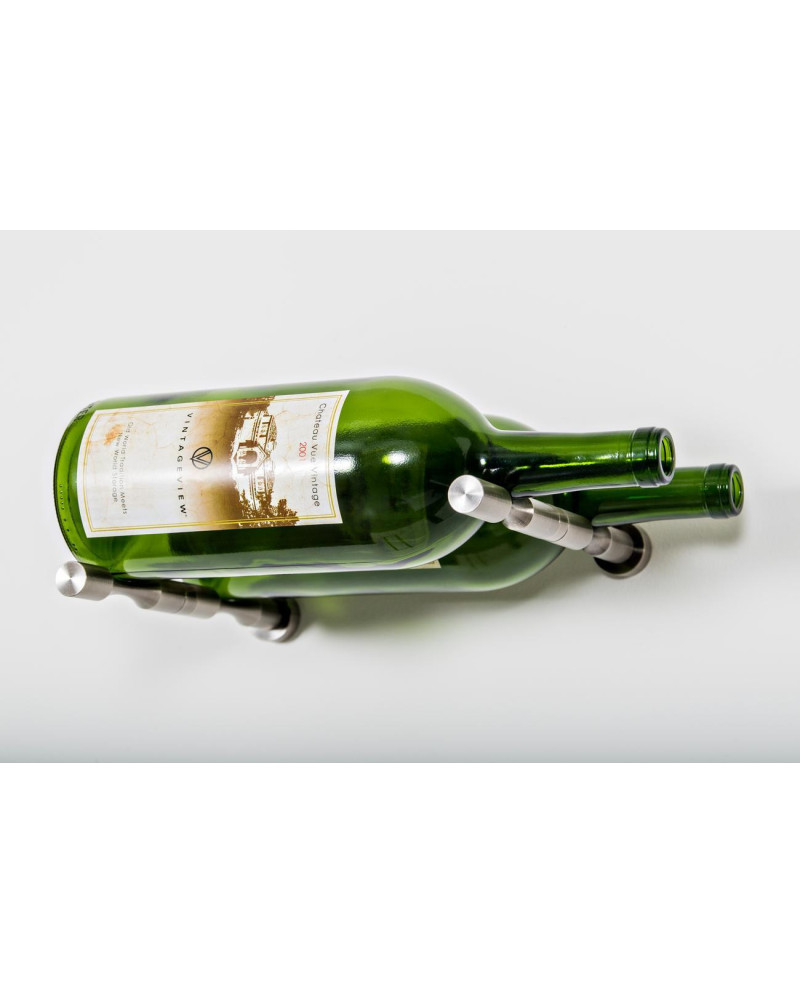 Winerack Vino Pins VPM2 - Depth 2 Magnums
This system excels in spaces where wall depth is limited or where you want a gallery-like presentation. Imagine a narrow hallway, a kitchen accent wall, or a dining room where you're displaying your most prized bottles individually. The VPM1 turns each magnum into a focal point rather than part of a collection.
The single-depth design also simplifies installation. With less weight per mounting point, you have slightly more flexibility in anchor placement, though you should still prioritize studs for bottles over 4 pounds.
At $33.88 per unit, the VPM1 is the most economical entry point for VintageView's magnum systems. If you're building a display gradually, adding bottles over time, starting with individual VPM1 units lets you expand without replacing hardware.
The trade-off is capacity. A wall 8 feet wide can hold roughly 12-15 VPM1 units horizontally, displaying 12-15 magnums. The same wall fitted with double-depth racks would hold 24-30 bottles. For serious collectors, the capacity limitation becomes apparent quickly.
Vino Pins VPM2: Double-Depth Magnum Capacity
The Vino Pins VPM2 doubles down on capacity by stacking two bottles behind one another. Each cubby holds two magnums, one in front and one behind, creating a 9-10 inch depth from wall to bottle tip.
This configuration maximizes bottle count in a given wall space. A wine enthusiast with 50-100 magnums can display their entire collection on a single wall using VPM2 units. The stacked arrangement also creates visual depth, the back bottles peek out from behind the front ones, adding dimension to your display.
The weight consideration becomes more significant with double-depth storage. Two magnums per cubby means roughly 9-10 pounds of force at each mounting location. This is well within the capacity of VintageView's anchor systems, but it reinforces the importance of proper installation.
At $64.13 per unit, the VPM2 costs roughly twice as much as the VPM1, but you're getting double the capacity. For collectors planning a substantial display, the per-bottle cost is actually lower with VPM2 units.
The aesthetic differs from single-depth racks. The deeper profile creates a more dramatic wall presence. In large wine rooms or restaurant settings, this visual impact is desirable.
Vino Rails VRM: Linear Magnum Display System
The Vino Rails VRM takes a different design approach. Rather than cubby-style storage, it uses a linear rail system where bottles rest in individual cradles along a horizontal track.
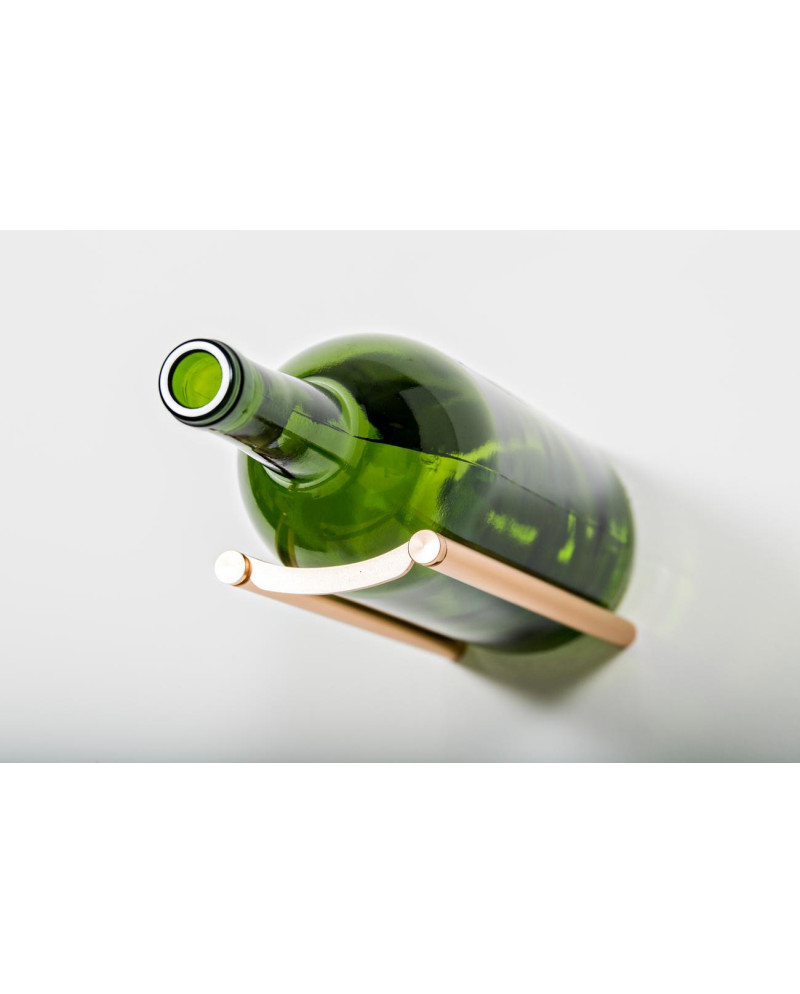 Winerack Vino Rails VRM - Depth 1 Magnum
Key Specifications for Magnum Bottle Racks
Understanding the technical specifications of magnum racks helps you match systems to your space and collection.
Bottle Capacity and Cubby Width Requirements
A standard magnum bottle has a diameter of roughly 3.5 inches at its widest point. Properly designed cubbies allocate at least 4 inches of width per bottle to allow for easy insertion and removal without forcing the bottle or damaging labels.
Rack Depth and Space Optimization
Rack depth directly impacts how far bottles project from your wall. Single-depth racks project 4-5 inches. Double-depth racks project 9-10 inches. Linear rail systems vary based on design.
Customization and Modular Expansion
VintageView's systems are modular, meaning you can start small and expand as your collection grows. You're not locked into a fixed configuration.
Material Durability: Powder-Coated Steel and Finishes
The material composition of a wine rack determines its longevity and how it performs in different environments.
Frequently Asked Questions
How should magnum bottles be stored for long-term aging?
Magnum bottles should be stored horizontally in a cool, dark environment with stable temperatures between 45-65°F. This orientation keeps the cork moist, preventing it from drying out and allowing air to seep in. Wall-mounted racks designed for magnum bottles maintain proper cork contact while allowing airflow around each bottle to prevent vibration and sediment disturbance. Label-forward storage lets you identify bottles without moving them, while neck-forward orientation works if your cellar design requires it. Metal racks with proper spacing reduce vibration and support the weight distribution needed for serious collections.
What makes a wine rack suitable for magnum bottles?
Magnum bottles (1.5-litre format) weigh significantly more than standard bottles, requiring racks built with heavy-duty materials and structural integrity. The best systems use powder-coated steel construction with proprietary anchor systems designed to handle sustained weight loads. Rack depth must accommodate the larger bottle diameter, typically requiring deeper cubbies than standard wine racks. The system should offer customizable bottle spacing to prevent contact between bottles, which can cause label damage or cork issues. Modular systems allow you to expand as your collection grows without replacing the entire installation.
Are wall-mounted racks safe for heavy magnum bottles?
Yes, wall-mounted racks are safe for magnum bottles when properly installed with appropriate anchor systems into solid wall structure. The key is weight distribution: each anchor point must be rated for the total load, and installation hardware must be matched to your wall type (drywall, concrete, or solid wood). Our systems use proprietary anchor technology designed to secure heavy bottles safely. Before installation, calculate your total collection weight and ensure wall studs or concrete can support it. Professional-grade racks designed specifically for magnum bottles have been tested for this load capacity.
How do I calculate space for a magnum bottle collection?
Start by counting your current magnum bottles and projecting future growth. Each magnum requires approximately 4-5 inches of horizontal width and 15-18 inches of height when stored horizontally. Account for rack depth: single-depth systems (like the Vino Pins VPM1) work for wall displays, while double-depth options (VPM2) maximize capacity in deeper spaces. Consider your wall dimensions and any architectural features like windows or doors. Modular systems let you start small and expand vertically or horizontally as your collection grows, making them ideal for collectors planning long-term growth.
What are the benefits of metal wine racks for large-format bottles?
Metal racks offer superior structural integrity and durability compared to other materials, essential for supporting the weight of magnum bottles safely. Powder-coated steel finishes resist corrosion and maintain their aesthetic appeal in wine cellars and display areas. Metal construction minimizes vibration, protecting bottles from movement that could disturb sediment or damage corks. The minimalist design of metal racks complements modern interiors while remaining collector-grade in function. Metal systems are also more adaptable to customization and modular expansion, allowing serious collectors to scale their storage as their collections grow.